
03 / Flow & heat transfer
See where the flow goes. And where the heat stays.
Pressure loss, uneven flow and temperature gradients can limit a product long before a component reaches its structural capacity. We help you evaluate those interactions with a focused fluid or thermal model.
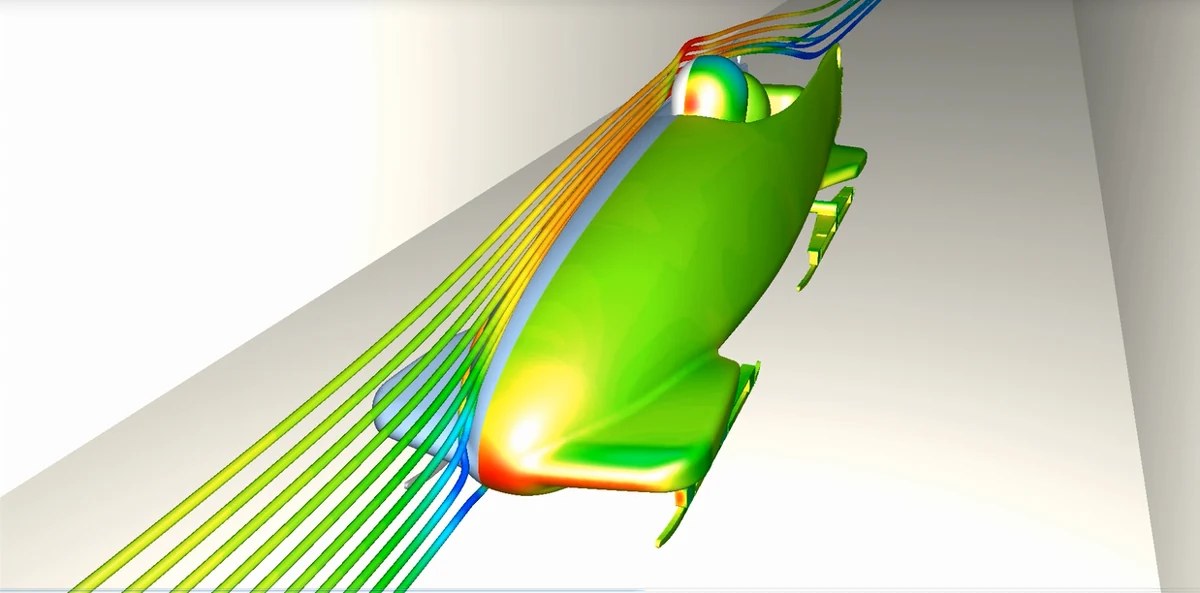
Is your cooling or flow concept doing its job?
We define the relevant flow paths, heat sources and boundary conditions with your team. The study can address internal flow, external flow or heat transfer. Coupled questions are scoped around the interactions that affect your design.
Flow distribution & pressure loss
Assess how flow moves through a component or assembly. Identify restrictions, uneven distribution and opportunities to compare alternative passages.
Cooling & thermal management
Evaluate heat transfer, temperature fields and potential hot spots. Compare cooling concepts under specified ambient and operating conditions.
Steady & transient behavior
Choose a steady-state or time-dependent approach to match the operating question, such as warm-up, changing heat input or varying flow.
Coupled engineering questions
Connect thermal behavior to structural response where expansion or thermal stress matters. Define the coupling and its assumptions explicitly.
Simulation, made visible
Explore the behavior.
Images and animations from the UNIKE Europe portfolio. Animations play automatically as they come into view. Use the controls to pause or replay.
Flow in motion
Time-dependent visualizations reveal behavior that a single still image cannot describe.
Transient flow
A flow contour evolves around and downstream of a nozzle-like assembly, revealing a changing wake over time.
Wind & structural response
Flow around a roadside sign is shown together with pressure contours and the sign structure’s response. Original Cradle attribution is retained.
From flow paths to heat transfer
Explore local flow patterns and the temperature field around a component.
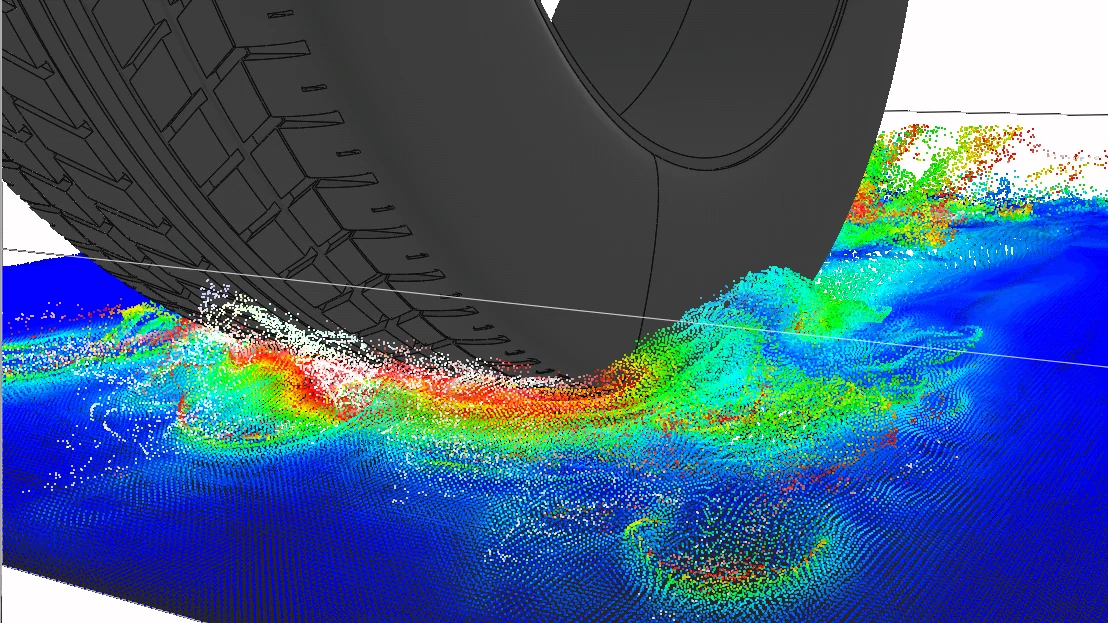
Flow at the contact region
A tire-flow illustration reveals local flow structures close to the road surface.
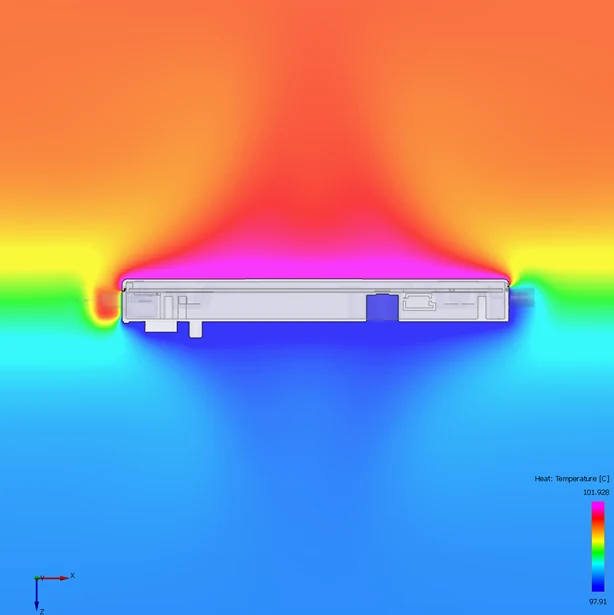
Heat transfer to the surroundings
A temperature-field illustration makes the heated region around a component visible.
Illustrative media from UNIKE Europe. Original software labels, legends and attributions are retained. These examples describe European portfolio material.
From analysis to action
What you take forward.
- Flow or temperature results tied to the specified operating conditions
- Pressure-loss, heat-transfer or temperature comparisons as appropriate
- An explanation of model assumptions, sensitivity and design implications
A useful starting point
Fluid properties, flow or pressure conditions, heat loads, material properties, geometry and measured temperatures or flow data where available.
We agree on methods, deliverables and the level of validation for your application.
Evaluate the effect of temperature on your structure.Start with the engineering question
What do you need to understand?
Tell us about the component, the system, or the decision ahead.